


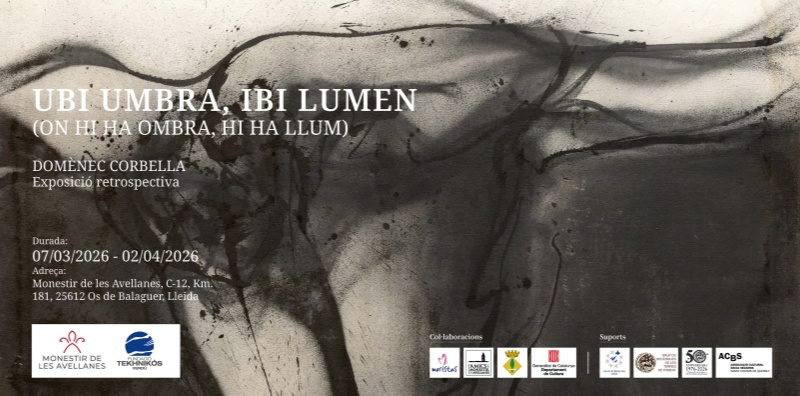
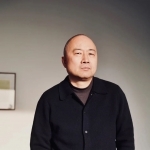
西班牙艺术家、巴塞罗那大学终身荣誉教授多明尼克·葛伯牙(Domènec Corbella)个人回顾展《光影同尘》(Ubi Umbra, Ibi Lumen)3月7日在西班牙阿弗兰纳斯修道院(Monestir de les Avellanes)议事厅正式开幕 。本次展览由修道院主办,Tekhnikós Verdú 基金会协办,集中呈现了艺术家青年时期(1983年前后)创作的9幅丙烯绘画作品 。
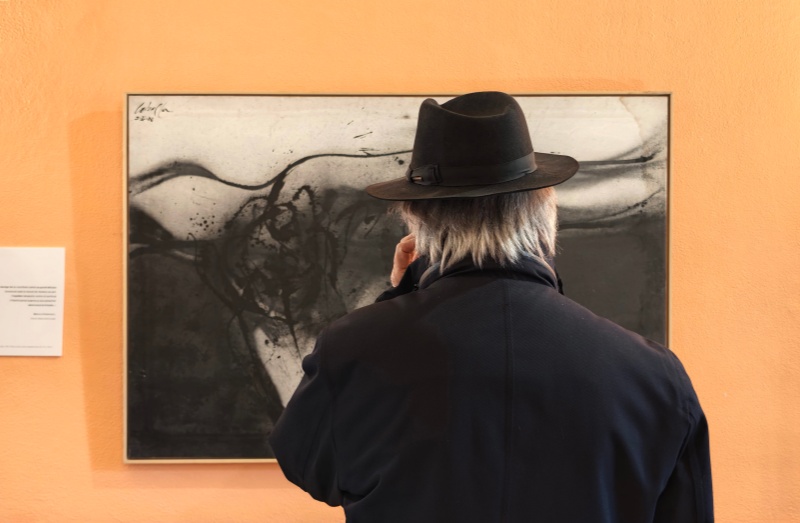
展览现场(图片由阿弗兰纳斯修道院提供)
本次展览被视为一次艺术家个人的“失而复得” 。这些作品自1984年11月在雷乌斯文化中心(Centre de Lectura de Reus)展出后,曾长期封存于艺术家的工作室中 。如今,在修道院议事厅静谧的氛围中,这些作品展现出跨越时代的艺术张力 。在艺术批评的维度下,西班牙哲学家Arnau Puig曾评价葛伯牙这一时期的绘画:“那种色彩的韵律……(以狂热、颤动、饱含色调的笔法作画),构成了其绘画的精神性……那是震颤、颤栗、战栗、惊叫、悸动、闪电与情感的交织。” ——(出自:AA.VV. 2011)。作家Joan Martí则在对其专著的解构中指出,这些作品展现了“上升”与“下降”的垂直辩证法:“上升的垂直性,是精神对物质肉体的主宰……而下降的垂直性,则是沉沦,是被大地吸引直至死亡的溃败。” ——(出自:Martí, 2006: 24)
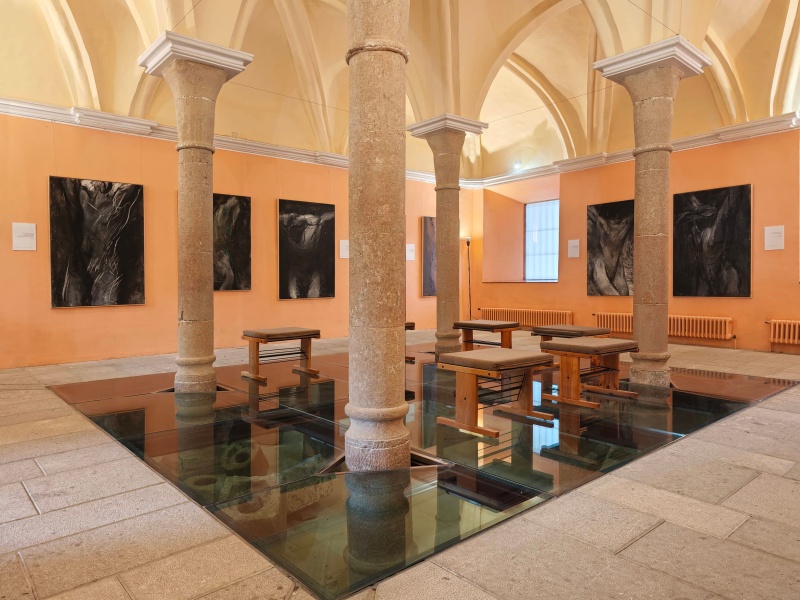
展览现场(图片由阿弗兰纳斯修道院提供)
开幕现场
在开幕式上,修道院展览负责人 Josep Àngel 将葛伯牙的艺术轨迹比作音乐中的“揉弦”(Vibrato),认为其早期作品中蕴含的叛逆力量与非写实主义(Informalism)精神至今仍令人震撼 。Fundació Tekhnikós Verdú 主席 Teresa Boleda 亦表示,画中展现的戏剧性与光影交织具有极强的感官冲击力 。艺术家多明尼克·葛伯牙本人在致辞中解释了这批作品背后的存在主义底色:“艺术对我来说始终是认知工具,是理解自我与世界的方式。这些画追求的不是传统意义上的审美,而是情感与真相。
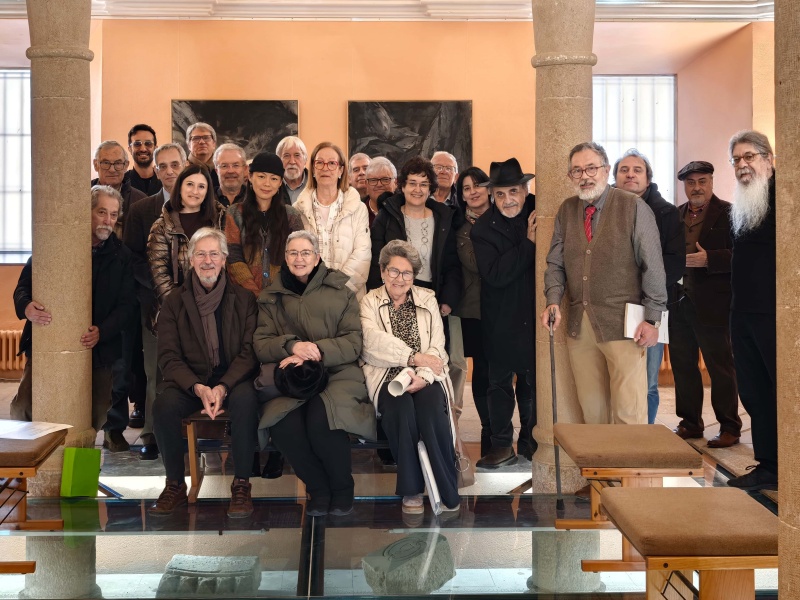
艺术家Domènec Corbella(左一)与开幕到场嘉宾合影(图片由阿弗兰纳斯修道院提供)
由形入理(DEL GEST AL SENTIT)
展览引导观众从两个维度理解作品:一是植根于当代非定型绘画(Informalism)浪潮的行为性绘画(Pintura performativa);二是关于死亡与人格转化的图像学象征 。正如展览中所引用的经典哲学论述:“艺术作品是透过某种性格所看到的创作一隅。” —— 埃米尔·左拉(出自:《沙龙现实主义者》,1866)“没有痛苦,就没有意识的觉醒。” —— 卡尔·古斯塔夫·荣格(出自:《心理学与炼金术》,1944)
展览信息:
展览标题:光影同尘
艺术家:多明尼克·葛伯牙
展期:2026年3月7日-4月2日
地点:西班牙阿弗兰纳斯修道院议事厅
Ubi Umbra, Ibi Lumen: Domènec Corbella
Ubi Umbra, Ibi Lumen (Where there is Shadow, there is Light), a retrospective exhibition by Spanish artist and Professor of Fine Arts at the University of Barcelona, Domènec Corbella, officially opened on March 7th in the Chapter House (Sala Capitular) of the Monestir de les Avellanes. Organized by the Monastery with the collaboration of the Fundació Tekhnikós Verdú, the exhibition features 9 acrylic paintings created during the artist's early period circa 1983.
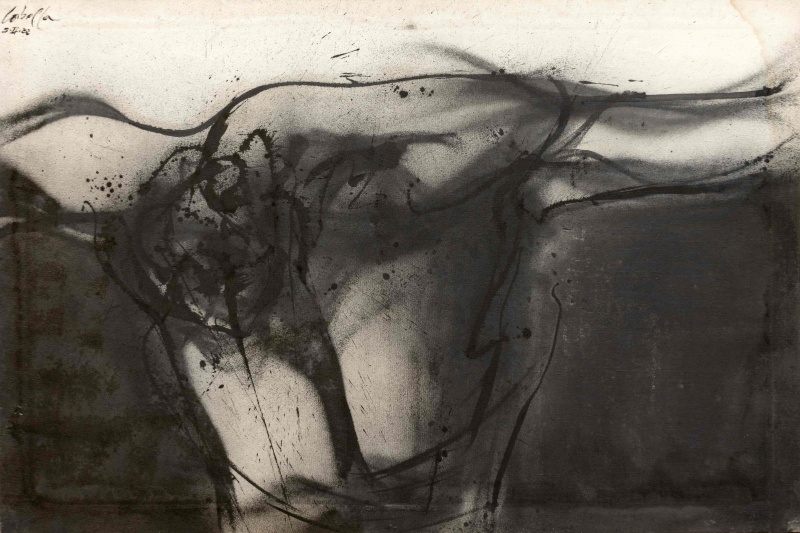
Crusifixio 3 | Acrylic on canvas | 97×130 cm | 1982
This exhibition is regarded as a personal "rediscovery" for the artist. Since their initial debut at the Centre de Lectura de Reus in November 1984, these works remained stored in the artist’s studio for decades. Now, within the contemplative silence of the Monastery’s Chapter House, they reveal a timeless artistic intensity.From the perspective of art criticism, the Spanish philosopher Arnau Puig once described Corbella’s paintings from this period as: "A chromatic calligraphy... (painting with rapid, shaken, feverish strokes, rich in tonalities), which constitutes the spirituality of his painting... Shivers, tremors, screams, agitations, lightning, and emotions intertwined." (Source: AA.VV. 2011) . Author Joan Martí further analyzed the "vertical dialectic" in Corbella's monograph: "Ascending verticality is the spiritual mastery over the material body... descending verticality is dejection, a terrestrial attraction until the defeat of death." (Source: Martí, 2006: 24) .
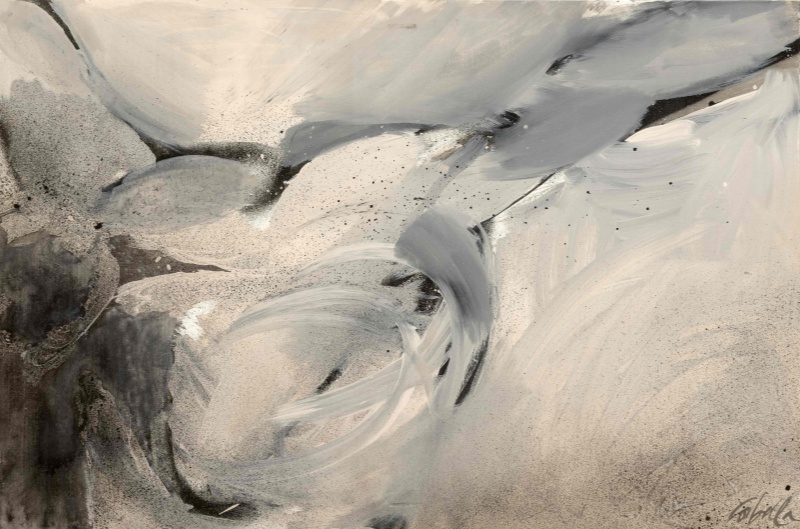
Crusifixio 4 | Acrylic on canvas | 97×130 cm | 1982
The Opening Ceremony
During the opening, Josep Àngel, head of exhibitions at the Monastery, likened Corbella’s artistic trajectory to a musical vibrato, noting that the rebellious power and Informalism of these early works remain profound. Teresa Boleda, President of Fundació Tekhnikós Verdú, remarked on the compelling sensory impact created by the dramatic interplay of light and shadow.In his address, Domènec Corbella explained the existentialist roots of the series: "Art has always been a cognitive tool for me—a way to understand myself and the world. These paintings do not seek traditional aesthetics, but rather emotional truth."
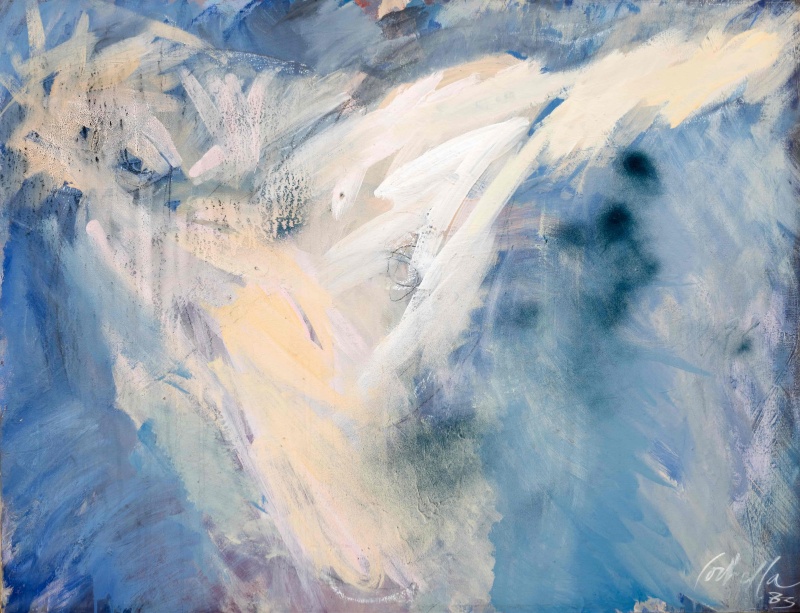
Crusifixio 5 | Acrylic on canvas | 89×115 cm | 1983
From Gesture to Meaning (DEL GEST AL SENTIT)
The exhibition invites viewers to engage with the work through two dimensions: the performative painting (Pintura performativa) rooted in contemporary Informalism, and the iconographic symbolism of death and personality transformation. This is echoed by the philosophical quotes framing the exhibition: "A work of art is a corner of creation seen through a temperament." — Émile Zola, "Les réalistes du Salon," L'Évènement (1866). "There is no coming to consciousness without pain." — Carl Gustav Jung, Psychology and Alchemy (1944).
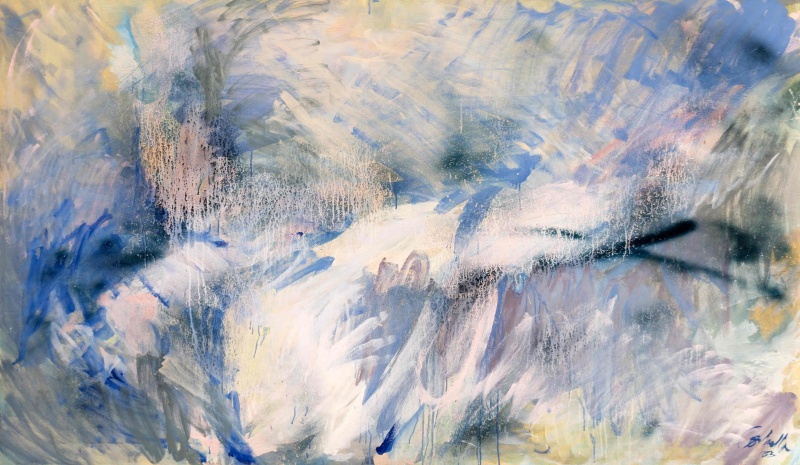
Crusifixio 6 | Acrylic on canvas | 100×150 cm | 1983
Exhibition Details:
Title: Ubi Umbra, Ibi Lumen (Where there is Shadow, there is Light)
Artist: Domènec Corbella
Dates: March 7 – April 2, 2026
Venue: Sala Capitular, Monestir de les Avellanes






 京公网安备11010502038436号