


从20世纪末期到21世纪初期的50年间里,亚洲各国通过模仿西方文明进程的现代化过程可以说已经告了一个段落。现在开始慢慢回归到真正地关注自身,关注亚洲人内心的原点上来,从而在亚洲这个大的范畴下又产生了很多新的不同的亚洲的概念。亚洲拥有超过世界人口60\\%的广大人口, 并且已经逐渐成长为新兴的庞大消费市场,在联合国和外交界也不再一味地处于弱势,而是逐渐崭露头角,越来越发挥着举足轻重的作用,并且越发成为全球瞩目的焦点。1990年随着世界格局的突变(美苏冷战以现实社会主义的分崩离析之后整个世界全面进入了资本主义和全球主义为主导的新时代),形成了欧洲-美国-亚洲-南美-俄罗斯的新体系。特别是中日韩亚洲三国涌现出来,在新的秩序下,在政治经济和文化地缘性等各个方面都扩大了国家的影响力。我们现在谈论的是亚洲的文化现象,面对传统的西方他者化意识,力图超越以往所谓的亚洲性(Asianness)或是东方学(orientalism)的束缚,而这都是源于新一代的亚洲在政治和经济上自信的结果。尤其是当今亚洲充满着无限的活力和多样性,相信必将会作为新兴文化源源不断的发源地发挥不可忽视的作用。多样的人种、宗教、文化交织纵横、融合下的多极化社会——亚洲,在过去的几个世纪以来经历过严重的隔阂和冲突,但如今我们超越了这一切的苦难,将我们的历史底蕴转化成激励新文化类型的动力并为迎接21世纪新兴的文化接触时代打造一个良好的平台。
这次的南京三年展之所以选取"Reflective Asia"这样的主题,也是为了更好地展现亚洲现当代艺术市场的实质和位置,当然同时也包含着以新的视角重新确认多样的亚洲文明并且进行解读的意图。如果说至今逐渐形成的后殖民主义和后西方主义中有关亚洲的思考、谈论、探索等大部分都是站在我们是西方社会受害者的角度来解读的话,这次的主题“再私有化的亚洲”,则是从已经在世界政治-经济-文化地缘中都逐渐发挥主导作用的亚洲自身的内部视角出发的。希望可以从内在的自身的角度出发去分析、解构甚至批判那些曾经被称作复杂多样的亚洲精神导师的我们内心存在的暴力和殖民根性。所以这次的展览多少会有很多让人觉得突兀和看着很不自在的作品出现,因为我们自身所存在的各种阴暗、成见和苦难的伤疤将被毫不留情地生生地摆到我们面前。
…
作为负责韩国和印度作品选择的策展人,我当然想要很好地契合这次南京三年展的主题,通过在南京这个有着特殊意义的城市中召集到的全亚洲的优秀当代艺术家们,展现一幅亚洲现当代艺术的全景图。中国曾经历的辉煌与低谷, 悠久的历史传统以及现代进程中遭受的不可磨灭的深重苦难,可以说这一切,都包含在“南京”这两字里。南京这座特殊的城市,可以说是能够诠释各样各色的亚洲城市诞生-没落-延续的这一过程的最佳代言人,而在那里为了生存奋斗者的每一个人,他们的过去—现在—将来相互交错冲突撞击迎来了新的文化接触时代。
…
文敬媛,她一边进行着新媒体艺术的创作(media processing)一方面却也没有完全抛弃传统的技法,有着十分扎实的手工功底。文敬媛一直致力于对于人周围环境的描绘--也就是风景/城市景象。《轨迹:城市景象之崇礼门》就是将不同角度和时期创作的崇礼门的绘图按照时间顺序排列起来,整个画面中,只有不变的主题和主体崇礼门是鲜明的,周围的景色都是稍纵即逝地呼啸而过。崇礼门虽然现在已经被人为的纵火损毁只剩下了遗址,但是那仿佛诉说着历史,凝固着古老时间的象征通过文敬媛的这一作品又活了过来。流动中的画面,静止的历史空间就好好像当下正在进行中一样再现在观众的面前。崇礼门的真实面貌仿佛瞬间又被还原了,时空倒流而它又得以作为一个持续不断变化的对象而延续下去。一个几乎应经被毁于一旦的历史文物余留的今时今日的意义又被重新树立了起来。另一幅描绘城市景象的作品《轨迹:首尔和平壤》,则是选择了南北朝鲜的两个代表城市,首尔和平壤的市政广场前的景象。该作品以广场的照片为底板,通过数码变色处理以及画面上生成许多无序/随机的格子。被各种大小不同的彩色格子覆盖的这两个城市景象在呼啸而过的车流中经历过一定的时间之后仿佛场景互换了。这就好像是对处于焦灼状态迟迟没有进展的南北对话的一种隐喻似的反讽以及作者希望尽早回复南北和平的心声。文敬媛作品 中的城市,伴随着传统和现代贯穿的政治问题,通过意识形态和数字化的处理,成为了交融的空间,从而也成为了历史的象征。
…
申美璟,她的创作以历史的遗产为动机,为我们提供地点、文化、时间移动的体验。她命名为《Translation-Vase》的这一组作品,用肥皂复制并展现了中国清朝和朝鲜时代瓷器的多重形态以及各种纹样。申美璟首先选择自己中意的陶瓷作品,用硅胶作出模型,然后往铸模中浇注融化好的肥皂水,等待凝固之后掏空内心,用加入了颜色的肥皂作出一个外廓,或者用天然染色剂在上面画出花纹。完成这一过程后就和普通的陶瓷器都要上釉的程序一样,在做好的模型外壁上用一层液体肥皂加膜抛光之后才进行展出。这组作品不仅造型美观,还散发着沁人心脾的香味,既有古典的优雅韵味又透着灵动机智,亦真亦假,以假乱真, 看似坚固却又有种摇摇欲坠的美感。申美璟为她的作品署名“translatin”的寓意,想必是翻译或是解读的同时也包含有移动的意思。申美璟,她用一种最为常见的材料--肥皂完成的这一组作品可以说对于文化的相互渗透、传播移植的形式,以及艺术独创性、复制和重塑的问题都进行乐深层次的探讨。
金基罗使用的是装置、录像、绘画等多种综合技法的结合进行创作。通过这一融合的作品形式,着重体现了文化间的差异。《患有偏执症的秘密花园》虽然是被称作“非常幽默地将资本主义社会下的人类呈现出来或者说是面会患有偏执症的 ‘正常人’”的作品,但是在看似搞笑的氛围下,这一作品同时也暴露了已经被严重西化了的所谓的东方主义视角的事实。由各种东方传统的瓷器和国籍不明的花盆充斥而成的这一作品,可以说有着双重含义。作为“韩国式的”或者说是“东方式的”的代表形象之一的传统陶瓷器和东方盆栽被一一陈列在观众面前,而实际上这些瓷器和盆栽是早已成为无国籍的世界流通品了还是说被狭隘地定位了,提出的反问。
Reena Saini Kallat的作品,把镜头对准了在印度社会由于受到政治和传统等级制度的压迫活在极度贫困中的那一群人。他关注他们的生存条件,倾听他们的呐喊。印度的神话传说、封建习俗、等级制度等严重束缚和制约了普通百姓的思想和生活条件。Reena Saini Kalla 将这些处于水生火热中的这群人的处境,他们为了生存的挣扎,他们的喜怒哀乐,用艺术的手段还原成疗伤作品。照片作品《Blueprint: Birthmarks and tattoos》拍摄的正是从出生起就带有胎记的和后天纹身的女性的身体。在印度的等级制度中认为人从一出生命运就是被决定好的,所以各种胎记被他们视作命运的指示标,而与此形成鲜明对比的就是可以后天自由选择在身上刺的纹身。图片上的纹身刺的是印度诗人塔毕士凯尔Tabish Khair的“净化的项链”,表达是命运不是天注定,而是自己选择的意思。照片所展示的景象似乎有一种驱赶威胁的视线的神奇魔力.
Leslie de Chavez在他的作品中,反映的是遭受西班牙和美国的殖民统治,丧失了自我和没有文化积累可言的菲律宾的文化体系,以及四分五裂混乱不堪的政治现状。他的作品总是会显得色调阴沉又或者干脆使用大面积的原色,包含了大量的隐喻和象征。作品中出现的人物大部分都是受到权势阶级迫害,面对苦难折磨挣扎的或是冷眼相对的受迫害者的形象。Leslie de Chavez的作品中出现的老鹰、可口可乐、万宝路香烟,以及能够一看便知是国旗的代表颜色等等,这些元素指涉的正是对菲律宾有着50年殖民统治的美国,美国文化早已渗透到了菲律宾的政治、经济、文化等社会各个方面,影响的程度只剩甚至至今在菲律宾民众的意识形态中还是根深蒂固,对此,作者显得无比愤怒和痛心。Leslie de Chavez的作品,通过隐喻和象征的手法强烈地批判了由于受到殖民统治的压迫,引起的本国文化的缺失以及国内格局负面的、混乱的一系列连锁反应。
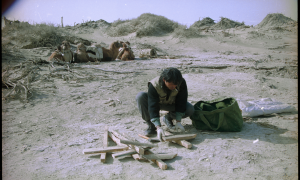
全浚晧的作品中出现了大量对纸币、广告、商品等商业元素形象的借用,将五光十色的商业社会不同的层面,以不同的元素为轴心进行了解构批判和一次重新的解读。“HYPER REALISM”是由5个频道的视频租成(组成)的作品,每个频道中分别出来乐(了?)北朝鲜逃亡者、纽约自由女神像、麦克阿瑟将军、金日成Kim Il Song以及北朝鲜币(面值100圆的纸币)等5个不同的媒介体,以动画的形式出现。在动画影像中,看起来像北朝鲜逃亡者的数个人想要翻阅(翻越?)围墙的动作不断反复;麦克阿瑟将军则在动画片中反复呐喊着 “I shall return”;100圆面值的北朝鲜纸币中,画面是一个看似十分疲惫的男人脱掉外套搭在肩膀上踏进草屋的镜头,并说道“我回来了”。这样的作品不禁提醒我们似乎和我们日常生活并没有多大关系的北朝鲜逃亡者和北韩核武问题到底是为什么;对于美国标榜民主自由的所谓万民平等(主)注意的概念在现代的资本主义社会中究竟起什么作用等等问题提出了质疑。艺术家全浚晧记录韩国社会的现实,并通过再现对我们大部分人冷漠的意识形态提出了挑战和批判。
李庸白的作品,关注的是当下最为新媒体艺术的焦点——“再现和象征”、“现实和模拟”、“异质性和不敬/大无畏/超神”等越来越边缘化的主体性。他用多样的手段将其视觉化并展现出来。李庸白的作品《天使—战士》(Angel-Soldier),该作品中用到了诸如视频影像,照片,装置等多种媒体手段,画面中所有的可见物都是被一种艳丽的人造花铺天盖地地覆盖着,充斥了整个空间,然而在视频影像中,当观众们突然发现一片花海中原来还有穿着同样图案(?)迷彩服伪装自己的战士们拿着枪正在小心翼翼地匍匐前进继而又消失的情形难免会为他们担心起来。《天使—战士》可以说是李庸白向那些艺术史上率先打破认识的界限,不断挑起变革的英雄们(白南准,杜尚,博伊于斯等大师们)致敬的作品,艺术家终于跨越了新的艺术形式和数字媒体领域之间的鸿沟,从中发挥的作用和位置通过该作品可谓一目了然。另一件大型的PVC雕塑作品《圣母怜子图》(PIETA)怀抱耶稣的圣母玛利亚的样子已经完全脱离了传统意义上的形象,而是使用电子人(Cyborg)或者说是机器人(robot)的形象代替。在雕塑制作过程中看到的模子组合起来直接成了圣母玛利亚,而中间孕育的就是耶稣了。这一手法可以说推翻了艺术造型过程根本的原理,固有的宗教代表元素成了现代艺术戏弄的对象。
Tallur L.N,他身上似乎兼备(了)乐典型的东方哲学中游刃有余、泰然自若的同时又带有讽刺和批判性的思考方式以及西方的逻辑性思维,从而往往能为观众带来强有力视觉冲击和余韵。他的作品中多借用印度的雕塑和建筑样式等带有鲜明印度风格(站在西方视角来看的时候他们认为很东方化的)的元素和形式。可以说是充满灵气和幽默地展现了他积极进取的意识,而有的时候又是以一种虚无主义的态度进行辛辣的讽刺和批判。同时 在他的作品中也可以看到当今政治全球化是如何影响我们生活的方方面面同时又是如何渗透到艺术创作中去的。
Anant Joshi作品往往旨在揭露生产力过剩的资本主义社会的弊病,表达一种对于体制的反抗以及对于西方文化内部深层次残留的暴力思想的反思等等。他用精巧的手工技术和光与影交替出现的装置空间展现了一个城市的幻影,以及在现代大都市中为了生存疲于奔命的现代人孤军奋斗的生存现状。他收集数百个made in china的玩具积木,通过变异和改造,搭建起来的微缩景现世界可以说把现代生产力过剩的消费社会中人们的迷茫展露无遗。
文亨珉,他所关注的是在现代美术和日常生活的关系中艺术家们的存在方式。虽然是现有的景观和事物,但是对我们来说其实都是陌生的。所以文亨珉不仅尽量避免艺术家主观视角和情绪的过分投入,也摈弃了传统的摄影艺术家和画家们原原本本呈现所见之物的表现方式,而是利用电脑的反复绘图和删减,最后只过滤留下最简单的图案,之后再重新用雕塑或者是照片的形式把它们表现出了来。城市风景,商品形象,教课书插画等等素材,只要是能够传达信息的所有可能的素材都被文亨珉用电脑进行再创作,删除纷繁的背景或者变成中性的空间。艺术家把能够传达事物特性和固有性的“信息功能”去除的这一过程行为可以说为如今生活在信息爆炸时代的我们提够了另一种看问题的视角。
陈起钟,他利用各种媒体的调动将(放)方方面面的社会现象用假想/假象世界的概念重现了出来。可以说大部分时候,观众们都是通过电视转播来了解世界的。在陈起钟的作品中,我们看到了和美国CNN9.11 恐怖事件现场报道中出现的飞机撞击和爆炸时烟尘密布场景几乎完全一模一样地再现,但是在画面下端不停滚动的英文注释却显得非常的无厘头,因为那是描绘苏格兰观光地风景的田园风格的诗句。在他的作品中,战争被设定成了好似电脑游戏一般的场景,而新闻播报员们也只不过是像机器一样成了嘴部不停运转的傀儡工具而已。艺术家在这里所呈现出的这些想象故事内容,充满(了)乐荒诞离奇的假象,似乎在提醒观众们我们平日里如此倚重的大众媒体带来的那些画面完全存在虚假的和人为加工的可能性测。
具东熙,在他用单道视频录制的作品中,往往都是看到他将出其不意的奇想转化为表演的过程。因为表演时的状况突发性和前所未有见性,总是会把观众看得一头雾水。所以说他的这些作品与其说用一般的理性思考方式去理解,倒不如用人类最本能的五感去感知,就把它当成直接的感知对象应该就能参透其中的内涵和作者的诉求。《静电和绳技》,作品中出现一男一女的身体就好像在进行复杂的翻绳游戏一样被绳索缠绕着,而绳索又突然发生瞬间的静电反应,从而表达了一种可以说是描绘超现实的转移和突变的故事的视频作品。该作品中所出现的地点,背景,水晶装饰物,烛台被钢丝吊着的一男一女的身体等每一个元素可以说都发挥了装置艺术的作用。而在艺术家所安排的突然的、让人隐隐不安的状况中,演员们仿佛成为了最为奇妙的道具,熠熠生辉。
朴和英,她为我们带来的是将视觉媒体和文本文字结合起来的一次新的综合地尝试。她将本人的自传小说《Chija&Dando》中想象的故事世界用绘画,实物,和影像的方式再现出来,可以说是完全混淆了现实和虚幻的界限,为观众呈现了一个亦真亦幻的奇妙世界。可以说在由她叙述式的影像镜头和文本文字魔术般地结合营造出来的带有强烈现实感的画面中,巧妙地融进了她对于语言和沟通媒介、环境和自然、资本和权力、分裂的存在、科学和文明的进步等等现代社会中无数的焦虑和不安、偶然和必然、虚拟和现实等等的思考,这些元素并不突兀地混合交织在一起。艺术家朴和英,她并没有局限于现有的艺术表现形式,而是力图跳出这个框子,更广泛地将出版、绘画、雕塑、装置、录像等各种视觉媒体充分地调动起来,并巧妙地结合文本文字的运用,可以说这是她在探索艺术新的表现方式和可能性的实验中迈出的一大步。
Susanta Manda,非常善于使用动态雕塑的元素,从而帮助观众扩大认知范畴,获得从视觉到触觉的更广泛的认知体验。印度传统话剧中经常会出现的光和影的要素,在他的作品中,被当作有机的要素得到了充分地运用。光和影的交错,以马达发动的装置不停地转动,糖水在带动下潺潺流动的同时产生的泡沫,整个给人营造出一种抽象而又神秘的空间之感。而利用光线的反射变化,投射在墙面上昏暗的阴影又不免让人在感官上、精神上增添了些许恐怖的气氛。空气、水、火等等,这些再普遍不过的元素,却被Susanta Manda打造出一个神秘到极致的装置空间和氛围来。而之所以他可以化腐朽为神奇,利用这一些都只是最简单的、可以说是几乎没有什么技术含量的素材,我相信是因为他回归到了最单纯、最本源的艺术创作上,从而才能为观众呈现出如此多层次的抽象空间来。
By Jaeyoung Kang
This Nanjing Triennial has adopted “Reflective Asia” as a theme, to display as best we can the substance and position of
As the curator in charge of works from
Moon Kyungwon engages in creation of new media art, yet she has not wholly abandoned traditional techniques, and she is solidly grounded in craftsmanship. Moon Kyungwon has always worked at depicting people’s surroundings—landscapes and urban scenes. “Traces: Sungnyemun As an Urban Scene” presents drawings of Sungnyemun from different angles, arranged in order of completion. Throughout this series, the gate of Sungnyemun is the distinct feature in each picture: the surrounding scene is a transient bustle. Due to an act of arson, only ruins remain where Sungnyemun once was, yet it is a testament to history. This concrete symbol of ancient times comes to life again in Moon Kyungwon’s pieces. Amid the pictures’ fluid variations, the quiet space of history seems to reappear before viewers as an ongoing process. The true face of Sungnyemun seems instantaneously restored; time has been reversed, and the gate is once again allowed to persist as an object which changes according to point of view. The present significance of an artifact which succumbed to a destructive act is re-affirmed. Another work depicting urban scenes is “Traces:
Shin Meekyoung’s works are motivated by questions of historical heritage. They convey feelings about place, culture and the passage of time. Her series of works titled “Translation Vase” renders Qing dynasty and Korean ceramics, of various shapes and patterns, using soap as a material. Shin Meekyoung selects ceramic ware and makes a mold of silicon resin, into which she pours liquid soap. When this solidifies, she removes it and hollows out the inside. She uses colored soap for each object, and paints on patterns using vegetable dyes. Just as with ceramics, she too adds a “glaze,” which for her is a brushed-on layer of transparent soap, which she encloses in a membrane and exposes to light. Only then is the piece ready to be exhibited. Not only are these pieces beautiful in external shape, they exude an alluring odor. Along with an air of classical grace, these inspired pieces show a flash of wit. They are genuine and artificial at the same time: the genuineness is rendered in an artificial medium. Part of their beauty lies in their seeming solidity but actual fragility. Shin Meekyoung calls her pieces “translations,” possibly implying that translation is an interpretation, but also a shift into another medium. This series of pieces by Shin Meekyoung, rendered in the everyday material of soap, explores questions of cultural interpenetration, of dissemination in new forms, of originality versus replication.
Kim Kira works by combining various techniques including installation, video and drawing. By merging creative forms, she demonstrates the dissimilarities among cultural forms. “Secret Garden Suffering from Obsession” is described as a piece that “manifests the human aspect of capitalist society in highly humorous form, or perhaps one could say it is an encounter with a normal person who suffers from obsession.” However, despite the seemingly hilarious atmosphere, this piece exposes the fact of an “orientalist” viewpoint under pressure of extreme westernization. One can see a double meaning here. Traditional ceramic ware and potted bonsai trees—typical “Korean style,” “oriental” images—are lined up before the viewer. In fact they have already become deracinated articles for world trade, and their significance has been narrowly defined. A question is implied by presenting them this way.
Works by Reeni Saini Kallat point their lens at people who live in extreme poverty due to political oppression and the caste system in Indian society. Out of concern for their living conditions, he gives heed to their outcry. The thinking of everyday people and their life conditions are seriously limited and dominated by mythical tales, feudal customs and the caste system. Reeni Saini Kallat begins with the predicament of these people, their struggle to survive, their joys and tears, and he turns these things into healing artistic statements. For his series “Blueprint: Birthmarks and Tattoos” he photographed female bodies marked by birthmarks or tattoos. In the caste system, a person’s lifelong fate is thought to be pre-arranged, so birthmarks are viewed as innate indicators of fate. Standing in distinct contrast to this are the tattoos, which are acquired features that one chooses for oneself. The tattoo in one picture reads “necklace of purity,” a phrase from the poet Tabish Khair, implying that fate is not arranged by heaven, but is chosen for oneself. The image in the photo appears to possess a magically powerful gaze which chases away threats.
The works of Leslie de Chavez reflect the loss of self and paucity of culture in the Philipino reality due to colonization by
Paper currency, advertisements, commodities and other images of commercialism are abundantly appropriated in the works of Jeon Joonho, who deconstructs, re-interprets and critiques facets of commercial society along the axes of certain elements. “Hyper Realism” is a work composed of five video channels on which five different sets of images appear as cartoons: escapees from
The works of Lee Yongbaek are concerned with current focal points in new media, which have shifted increasingly toward marginal areas: “replication and symbolism,” “reality and modeling,” “impurity and disrespect/ fearlessness/ divinity.” He uses a variety of means to render these in visual forms. Lee Yongbaek’s “Angel-Soldier” is a multi-media work of video images, photographs and installation. All visible images are overlaid with showy artificial flowers which pervade the entire space, but the effect becomes unsettling when viewers look at the video screen and discover a discordant image among the sea of flowers—a soldier in camouflage gear crawling cautiously forward, rifle in hand, until he disappears. One could say that “Angel-Soldier” is Lee Yongbaek’s tribute to the heroes of art who led the way in breaking through our cognitive barriers (Duchamp, **Borhuis, and Bai Zhunnan). The artist has finally crossed the gulf between new artistic forms and digital media; in this piece his attainment in this regard is clearly seen. Another work is his large vinyl sculpture “Pieta,” in which the traditional form of Mother Mary embracing Jesus is dispensed with. Instead, the artist uses cyborg-like, robotic imagery. In the process of executing the sculpture, components are assembled into the shape of Mother Mary, and this same process generates the form of Jesus as an intermediary stage. This technique seems to disregard a basic approach to artistic image-making; at the same time; it also toys artistically with religious iconography.
Tallur L.N. moves with ease in a realm of oriental philosophy, yet he simultaneously charges his works with ironic critique and Western logical approaches. Thus his work frequently impresses viewers with its strong visual clashes and lingering resonance. Because he draws on Indian sculptural and architectural forms, most of his works show a distinctly Indian handling of elements. His inspired, humorous manner gives ample evidence of his positive, forward-looking mindset, yet at the same time there is a touch of nihilism in his relentless irony and critique. In his works we can also see how the globalization of politics is influencing every facet of our lives—even penetrating into the creative realm of art.
Many works by Anant Joshi focus on exposing the ills of excess productive capacity in capitalist societies; they express opposition to the current system and reflect upon the residual violent tendencies at a deep level within Western culture. Using deft craftsmanship to set up an installation space of alternating light and shadow, he displays the illusion of a city, along with the weariness and isolation of people eking out a living in a modern urban setting. Having collected hundreds of wooden building blocks (“made in
Moon Hyungmin is concerned with the relation of modern art to daily life and the mode of existence which this implies for an artist. In our current setting we often find scenes and objects which are strange even to us. Thus Moon Hyungmin stays away from an artist’s subjective views and excessive investment of feelings. He also abandons the traditional expressive mode for photographic artists, namely the full-on presentation of a visible object. Instead he uses computer drawings from which visual details are repeatedly deleted to result in the simplest possible motifs. Then he renders these anew as sculptures or photographs. Urban scenes, images of merchandise, textbook illustrations—anything which conveys information is eligible as material for Moon Hyungmin’s computer recreations. He deletes profusely detailed backgrounds or converts them to a neutral space. This incremental process by which the artist effaces the “information bearing function” of a uniquely constituted being gives us an angle for re-examining how we live in an age of exploding information.
Zin Kijong scrambles media inputs in order to replicate multi-faceted social phenomena through an illusory world picture. It is safe to say that most viewers understand the world by way of TV broadcasts. One work by Zin Kijong gives a fairly accurate simulation of CNN’s on-site broadcast of 9/11, with a plane smashing against a building and smoke belching into the air. However, the breaking news in the rolling English subtitles strikes a jarring note, because it describes the pastoral beauty of a Scottish tourist attraction in glowing poetic terms. In Zin Kijong’s works, war is treated like a scene from a computer game, and news anchors look like puppets or stage props, with mouths that flap on and on mechanically. These scenarios presented by the artist are full of absurd, lurid illusions, as if to remind us that the mass media representations we rely on are subject to artifice and falsification.





 京公网安备11010502038436号