


文:吴文光
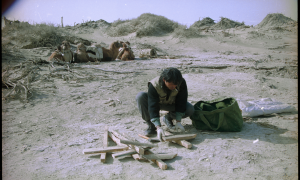
认识原一男的电影,我很早就开始,1991年在东京的时候,山形记录片电影节开始之前,我有一段空闲时间,除了去小川的工作室外,就是在山形电影节的东京事务所看片。我那时是记录片的饥饿之人,什么样的片子给我都会当作粮食狼吞虎咽塞进肚里。山形电影节当时的管事人矢野先生就是每天给我塞东西的人。原一男的《前进!神军》就是矢野塞给我的,给我时他什么都没有提示,只说:这个你想看吗?看了,觉得拍的是一个脑子有毛病的前日本“皇军”,战争结束多年后,自己满世界去找从前战友,要他们出来揭露战争罪行,其中一桩罪行是吃士兵的事。当然前战友都拒绝他的要求,这人就死缠烂打,盯住不放,还动手打不跟他去揭露罪行的前战友。这些前战友都已经是白发斑斑的老头了,被他按在自家塌塌米上猛揍,是挺滑稽的,也挺疯狂的。片子看完,还给矢野,他也没有问我觉得如何,当然也没和我说,这个原一男还有另外的记录片,更加疯狂和不可思议。
当时,刚刚认识小川绅介的记录片,在他的工作室看了他大部分片子,也听他说对记录片的理解和认识。我把小川这个人、还有他的片子当作我的指路明灯。我是小川电影的疯狂追随者,觉得记录片就是应该这样,匕首一样插入社会的身体和心脏,剖开来,看被遮蔽的黑暗深处。之后我回到北京,满脑子都是小川的话,也满脑子是小川电影里匍匐在地上、和警察面对面对峙的农民;我马上着手着急要做的就是和文革和红卫兵有关的“我的1966”。
所以除了矢野给我原一男这个片子看,其他我认识的日本人,没有一个和我提起原一男这个人,包括他的片子。即使当时如果有人把原一男的其它片子给我看,比如《我的绝对隐私1974恋歌》,那我当时一定觉得,居然会做这种很暴力很黄色的片子,这个作者脑子一定有问题。所以注定我当时是要和原一男这个人擦肩而过。即使93年的山形有个什么电影座谈,我被安排和原一男坐在一起,介绍后我脑子就想:哦,就是那个拍神经有问题的“皇军”的人。
擦肩而过,回头再重新找这个人就是17、8年后的事了。
这个时候我转变巨大的是,曾经疯狂追随的小川和怀斯曼,不再被当作记录片的标准和方向了,更多的可能和方式,随着个人方式或“私人影像”的尝试,正在逐渐展开。再说直接一点就是,觉得记录片不应该只是充满火药枪膛或磨得亮闪闪的刺刀,动不动就要直奔社会心脏;社会现实的多重与微妙,影像表达也应该是多种方式;此外,我也看到一种隐藏的危险是,那些口口声声以记录片为社会责任感的作者或研究者,也在享受着记录片给自己带来的好处。
这个时候再和人谈论原一男、包括他的片子时,就是完全是一种希望拥抱的心情了。这个时候马克出现了,他是研究日本电影的高手,沉浸日本文化和电影圈子多年,和他最早在山形认识,后来他回了美国,在密西根大学当教授。2007年冬天我在密西根大学放片和讲座,完了一群认识的人去了一家酒吧。嘈杂的酒吧里和马克说起原一男的片子,马克的眼睛在镜片后闪着光,毫不掩饰地大声赞美原一男的片子。以后另外两次见面,一次马克来草场地,一次是去年3月在云之南,我们在说原一男的片子,同时商量着怎么做成一个放映专题。去年10月去山形前,马克来邮件说,约好了和原一男一起在山形见面,具体谈这个放映专题如何实现。这个事情就这么在马克鞍前马后张罗、沟通、协调下,逐步地水落石出。
终于,我们在只谈小川记录片这么多年以后,开始说说原一男的记录片了。这一时刻迟到了将近20年,我们应该在90年代初,和小川的片子一起来谈的,如果那样的话,真实影像的创作就不会只是一条胡同奔到底了。
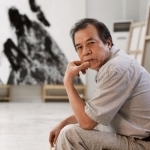
去年10月,在山形见到原一男,夜色街头的原一男一头黑发。我知道他已经60多岁了,我怀疑他的头发和夜色或者和什么染色剂有关。我问了:头发怎么这么黑?原一男大笑:这是天然的。之后我们在日式小酒馆喝着原一男推荐的北海道清酒、还有薰鱼。自然我们谈到小川绅介,原一男声音很大地说;我尊重小川这个人,但我的电影是反小川的。我吓一跳,日本人罕见有这么直接表达的。转头我看马克,他微笑不语。
尊重小川,但电影是反小川的。前者我非常同意,后者我非常感兴趣。如果小川的电影是直接捅向社会的子宫,那原一男的镜头奔的是人的子宫。在社会的子宫里看人,或者是在人的子宫里看社会,究竟有何不一样呢?
总之,原一男的全部记录片都亮相在这里了。这个事情做到如今,能在草场地工作站和伊比利亚当代艺术中心变成现实,不得不说是个了不起的事。这其中涉及相当多的人鼎立相助,没有这些热心人的一把力,这事可能就黄了。这里我没法绕开这些人的名字:首先就是马克了,没有他两年前就开始的热心和推动,这事可能就连开个头都难以做到;然后是张亚璇和左靖,他们俩介入此事,促成这个计划走向更高一步;自愿担当影片字幕翻译的冯艳和季丹,更是为原一男这些片子最终变成中文版做出了实实在在的贡献。还有很多隐藏在这个事情过程中的人,名字就不一一列出了,只有我清楚他们的功劳何在。
策划人之一马克∙诺恩斯简介:
密西根大学亚洲语言与文化教授、影像艺术与文化系主任,也是日本记录片研究领域的专家,著有《高压森林:小川绅介和与战后的日本纪录片》、〈日本记录片:明治时期到广岛〉,担任“记录片特辑”(Documentary Box)的“记录片国际研究”编委;从1990年至2005年,担任山形国际记录片协调,曾策划若干电影回顾展,如“日美电影战争”、“以自己的眼睛:原著民电影与录像节”、“电影七变化”等。其余著作还有:《日本电影研究指南》(与人合著)、《电影巴别塔:全球电影传译》等。
(翻译:吴文光)
(translation excerpts)
Getting to Know Hara Kazuo
by Wu Wenguang (translated by Leslie Tai)
My course of getting to know the work of Hara Kazuo began long ago. 1991, Tokyo, before the start of the Yamagata International Documentary Film Festival. Besides my regular visits to the studio of Shinsuke Ogawa, I spent my idle hours in the Yamagata IFF Tokyo office perusing films. In those days, I was a hungry man. Any type of documentary film I encountered, I devoured as foodstuff, that which was necessary to my survival. Mr Yano, of the Tokyo office, was responsible for rationing my daily bread. That is how I happened upon The Emperor's Naked Army Marches On by Hara Kazuo. He handed it to me without so much as a warning, only a cursory: “Have you seen this one before?”
What I saw was a film about a former Japanese Imperial Army soldier, a madman. Many years after the war, he traveled the world in search of his former comrades-in-arms, demanding that they divulge their war crimes, seeking specifically to uncover acts of cannibalism committed against their own compatriots. Okuzaki’s attempts met certain denial. Yet he latched onto his prey, and resorted even to physical violence. These former comrades were white-haired and liver-spotted old men. To see them pinned down and beaten furiously on their own tatamis was quite farcical, and quite demented. I handed the film back to Yano, who took it back without a word, much less further warning that there were other films of Hara Kazuo that were even more maddening, even more unthinkable.
At that time, I had recently become acquainted with the work of Shinsuke Ogawa. In his studio, I watched his films, and learned from him his understanding of documentary film. Shinsuke, his person, and his films became my beacon. I was Shinsuke’s crazed follower; I thought, this is what documentary film ought to be: a dagger thrust into the heart of society, pried open, revealing the darkness that lay in its depths. When I returned to Beijing, my mind was brimming with Shinsuke’s words, with Shinsuke’s peasants, writhing on the ground, face-to-face in confrontation with the police authorities. I anxiously set myself to the task of making 1966, My Time in the Red Guards, a film about the Red Guards and the Cultural Revolution.
Besides Yano giving me the film to watch, no other Japanese person I met in those days made a single mention of Hara Kazuo or his films. If someone had handed me one of his films, like Extreme Private Eros: Love Song 1974, I would have thought the violence and pornographic content could only be the work of a madman. And so I was destined to brush shoulders with Hara Kazuo. In 1993, at some Yamagata IFF discussion panel, I was seated next to Hara Kazuo. After the introductions, I thought to myself, Ah, this is the man who made the film about the psychotic Imperial Army man.
A shoulder’s brush. The next time I looked back, it was 17, 18 years later.
By this time, I had undergone a metamorphosis. Shinsuke Ogawa and Frederick Wiseman, directors whose works I had once followed with a religious fanaticism, no longer represented the standard, the way. New possibilities, new ways were opening up as I made attempts to make personal film, personal documentary. To put it bluntly, I no longer adhered to the role of documentary as gunpowder in the gun barrel or the sharp and glistening bayonet, positioned a hair’s distance away from entering straight into the heart of society. The weight and the subtlety of social reality were asking for different ways of representation. Moreover, I had become alert of a present danger: The main spokespeople for documentary film, the filmmakers and the researchers who propounded its use for social justice, were in their turn, enjoying the spoils that documentary film brought to them.
In those days, anyone who brought up Hara Kazuo and his films, I would have greeted with embrace. This is when Mark Nornes appeared. Mark was a high hand of Japanese cinema research, having been immersed in the Japanese culture and film circles for many years. I first got to know him at Yamagata. Afterwards, he returned to the U.S. to teach at the University of Michigan. In 2007, I was at Michigan giving a lecture screening, and a few of us headed out for a drink afterwards. Over the bar house din, Mark and I picked up a conversation about Hara Kazuo. His eyes danced behind his spectacles; unable to contain himself in the least, he offered his roaring admiration of Hara Kazuo. Two meetings later: once at Caochangdi and the other at last year’s Yunnan Multi Culture Visual Festival, we continued talking about Hara Kazuo and how we would organize a retrospective screening. Last October before heading off to Yamagata, Mark sent an e-mail saying he had made an appointment with Hara Kazuo. Alas, the three of us would discuss making his retrospective into a reality. After a lot of meeting, greeting, and coordinating on the part of Mark, the water receded to reveal the rocks beneath.
After years of dialogue revolving around Shinsuke Ogawa, alas, we can begin a new dialogue about the work of Hara Kazuo. The moment has arrived twenty years behind schedule; the work of Hara Kazuo should have entered our consciousness along with the work of Shinsuke Ogawa in the 90’s. If that had been the case, documentary filmmaking today would have had more than one light at the end of the tunnel, more than one hutong to race to the finish.
Last October, I met Hara Kazuo on a street with a bustling night scene. He had a head of jet black hair. I knew he must have been sixty-some years old by then. I suspected his hair color had something to do with a special dose of hair dye. I asked: How do you keep your hair so black? Hara Kazuo chuckled: It’s natural. We ducked into a Japanese bar and over his highly recommended Hokkaido sake and smoked fish, we talked about Shinsuke Ogawa. He loudly proclaimed: “I respect Mr. Ogawa as a person, but I against Ogawa’s film.” I jumped out of my skin at his rare display of forthrightness. I glanced at Mark, who smiled knowingly.
To respect Ogawa, and yet to be against him. I agreed with the former, and my interest was aroused by the latter. If Ogawa’s films are meant to stab through society’s womb, Hara Kazuo’s films stab through the womb of the individual. To observe humanity through society’s uterus, or to observe society through the individual’s uterus, what is the difference after all?
【编辑:小红】





 京公网安备11010502038436号